
LED
Common wattage: 80–300 W
Typical output: 5000–30000 lm
Colour temperature / output: 2700K–6500K; RGB/RGBW versions exist
Voltage: 120V; 220–240V; fixture-specific
Notes: Output and beam distribution vary widely by retrofit design.
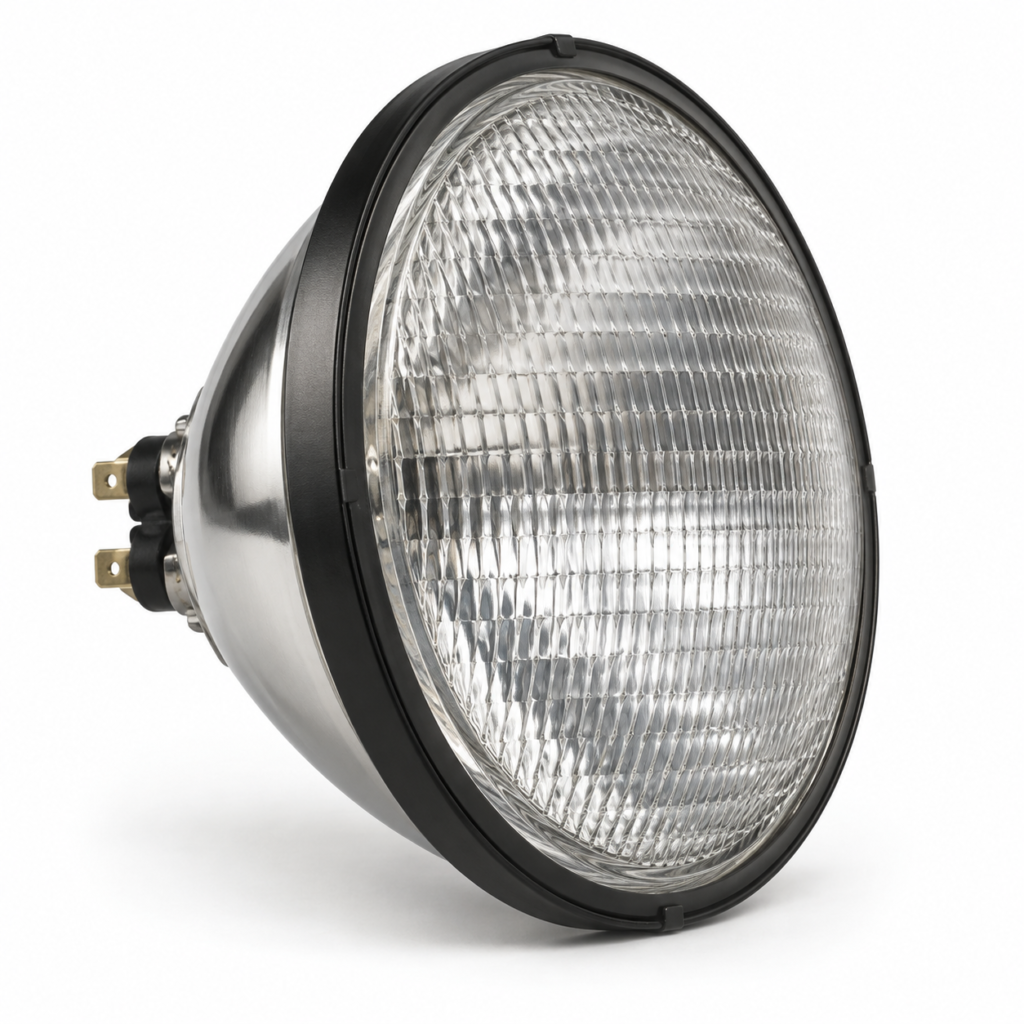
A large sealed-beam PAR lamp format used where powerful, controlled light is required.
PAR means parabolic aluminized reflector. The number 64 indicates a nominal face diameter of 64 eighths of an inch, or approximately eight inches. The lamp has a deep reflector and a sealed front lens.
Theatres, concerts, stage lighting, large venues, architectural effects and legacy entertainment fixtures.
PAR64 lamps are traditionally incandescent or halogen sealed-beam lamps. LED retrofit units also exist, but their beam, dimming and fixture compatibility must be checked carefully.
Technologies represented in this library: LED, Halogen, Incandescent.
Available base types: GX16d, Mogul End-Prong, Screw Terminal.
Common wattage: 80–300 W
Typical output: 5000–30000 lm
Colour temperature / output: 2700K–6500K; RGB/RGBW versions exist
Voltage: 120V; 220–240V; fixture-specific
Notes: Output and beam distribution vary widely by retrofit design.
Common wattage: 500–1000 W
Typical output: 10000–30000 lm
Colour temperature / output: Approximately 3000K–3400K
Voltage: 120V; 220–240V
Notes: High-output versions with several lens and beam patterns exist.
Common wattage: 500–1000 W
Typical output: 8000–25000 lm
Colour temperature / output: Approximately 2800K–3200K
Voltage: 120V; 220–240V
Notes: Legacy sealed-beam versions range from very narrow spot to wide flood.
These are representative market ranges, not guaranteed limits. Availability varies by manufacturer, voltage, base, beam, finish, region and product generation.
Match the fixture, voltage, base, wattage limit, beam designation, lens pattern, overall depth and dimming system.
PAR64 lamps operate at high temperature. Use the fixture’s protective screen, ventilation and specified lamp orientation. Similar-looking sealed-beam lamps may have different terminals and beam patterns.
Important: The library describes a lamp format, not a particular product. A shared shape does not guarantee matching voltage, base, dimensions, light distribution or control requirements. Confirm the fixture label and product datasheet, or ask a Bulb World lighting specialist.
Match the fixture, voltage, base, wattage limit, beam designation, lens pattern, overall depth and dimming system.
PAR64 lamps operate at high temperature. Use the fixture's protective screen, ventilation and specified lamp orientation. Similar-looking sealed-beam lamps may have different terminals and beam patterns.
These are common market ranges. Exact specifications vary by manufacturer and product
Send us a photo, the markings on your existing bulb, or your fixture details. Our team will help you identify a suitable replacement.